74 cm Balance Board – 7 Levels for Core & Stability
Train balance, core strength, and coordination at home with steady progression from beginner to expert.
Why a balance board is worth it
Core, proprioception, and balance board training at home
Home balance training
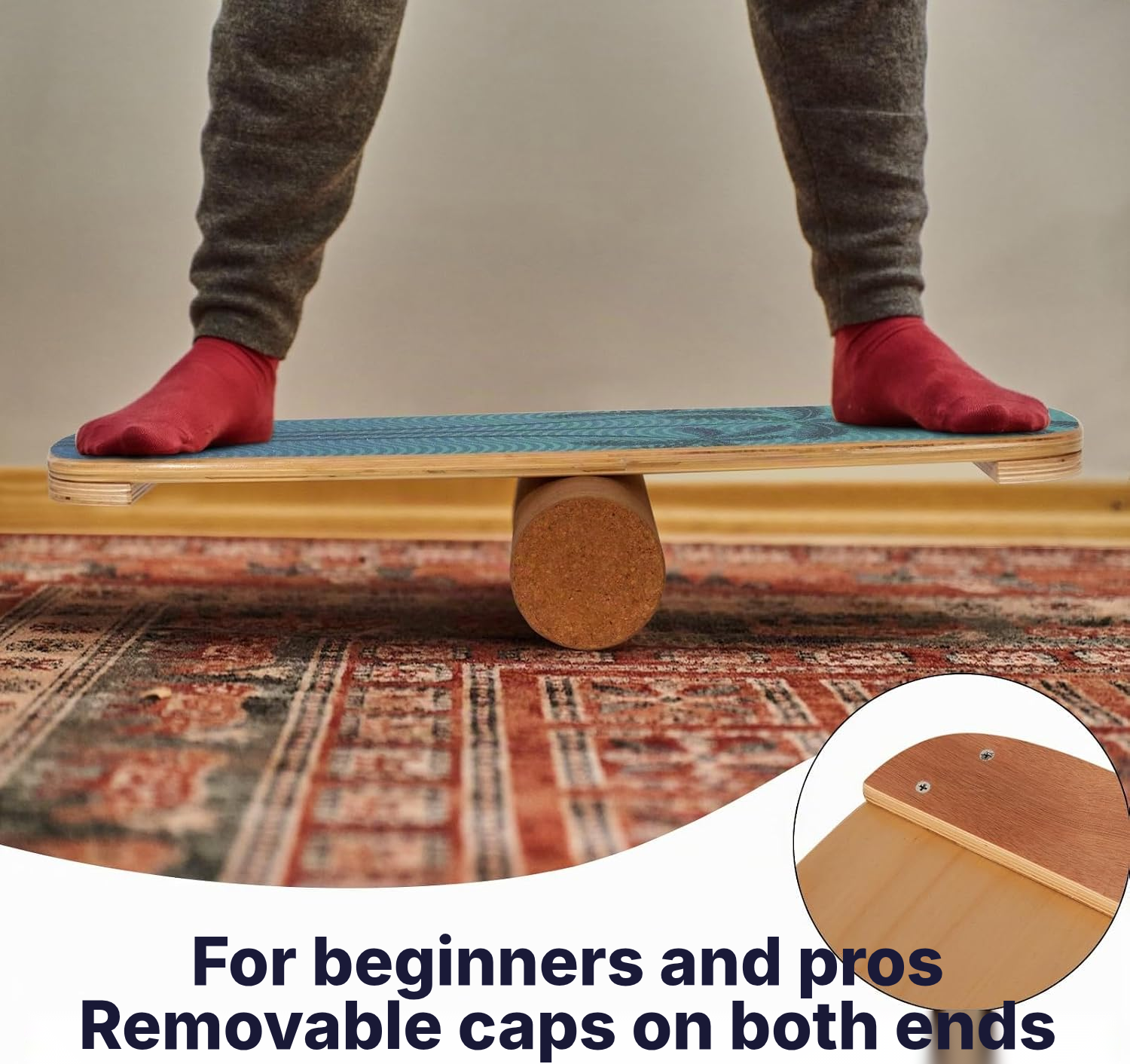
Drop the board on the roller and train ankle stability without bulky kit.
Core and trunk work
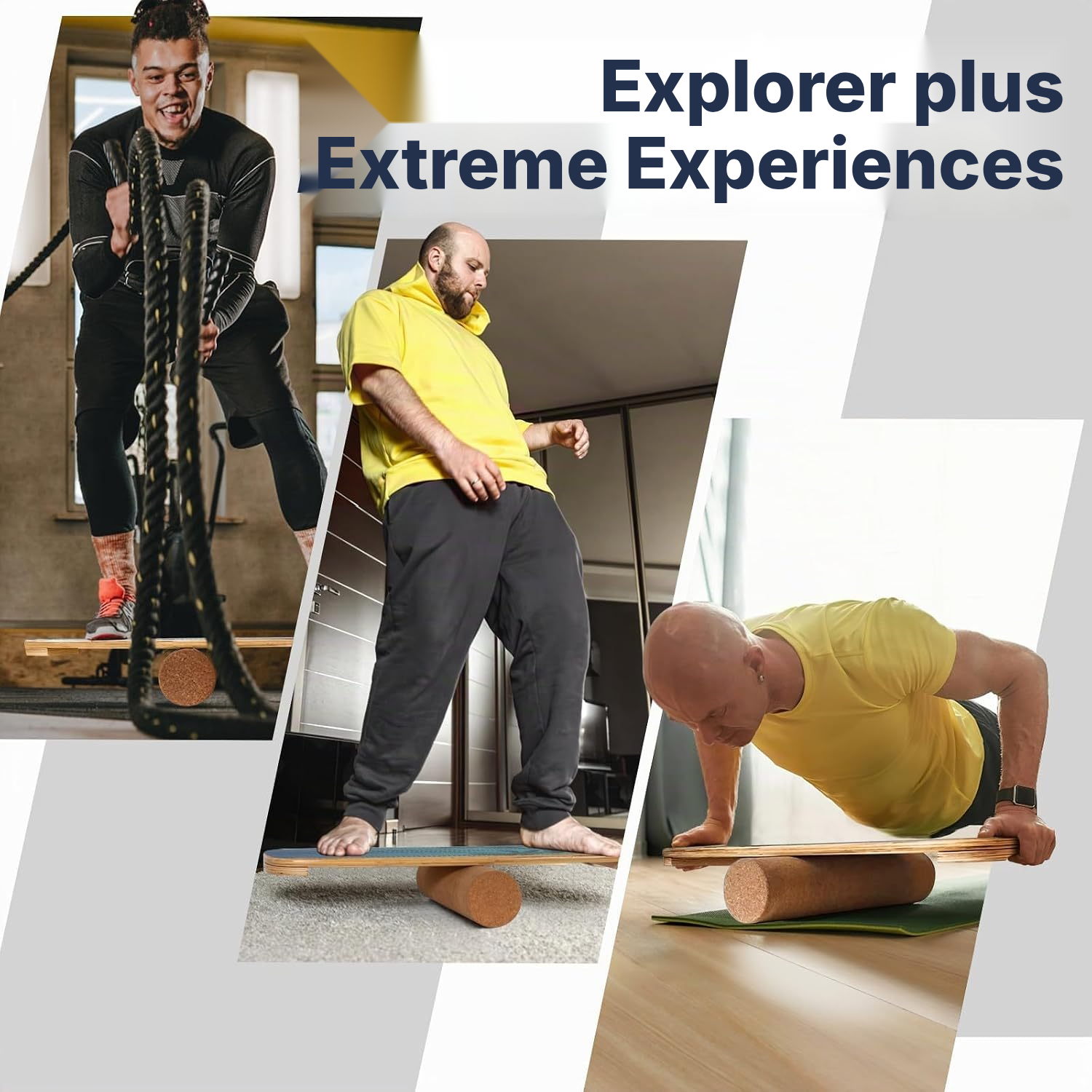
Add wobble to planks, push-ups, and mountain climbers to fire up the stabilisers.
Board sports prep
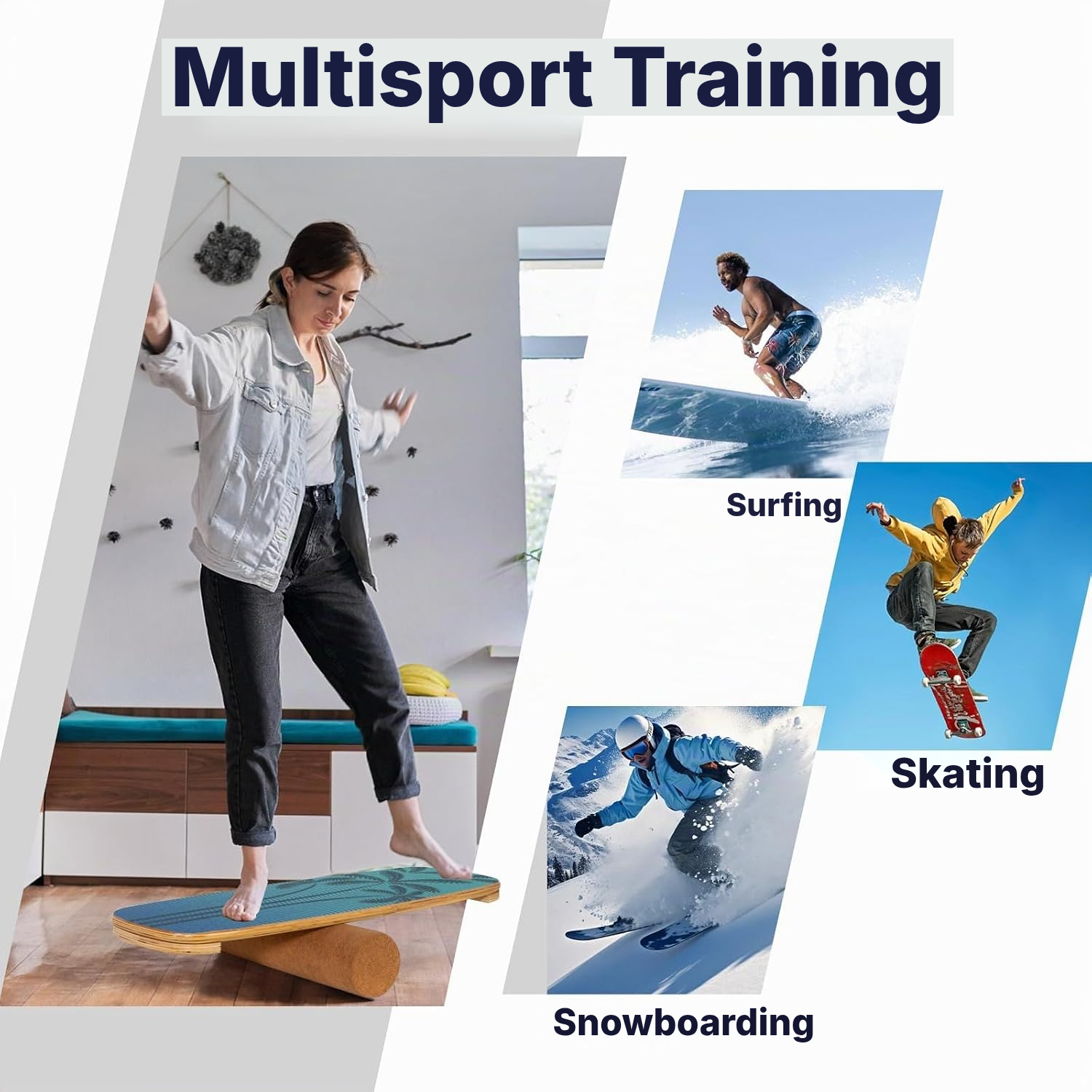
Build the foot and knee control you need for surf, snowboard, ski, skate, and SUP.
Proprioception
Tune the stops from LVL1 to LVL7 to sharpen coordination and body control.
Full home workout
Cover squats, lunges, dips, hip bridges, and oblique twists on one bit of kit.
Standing desk wobble board
Slide it under your standing desk to keep ankles and core active while you work.
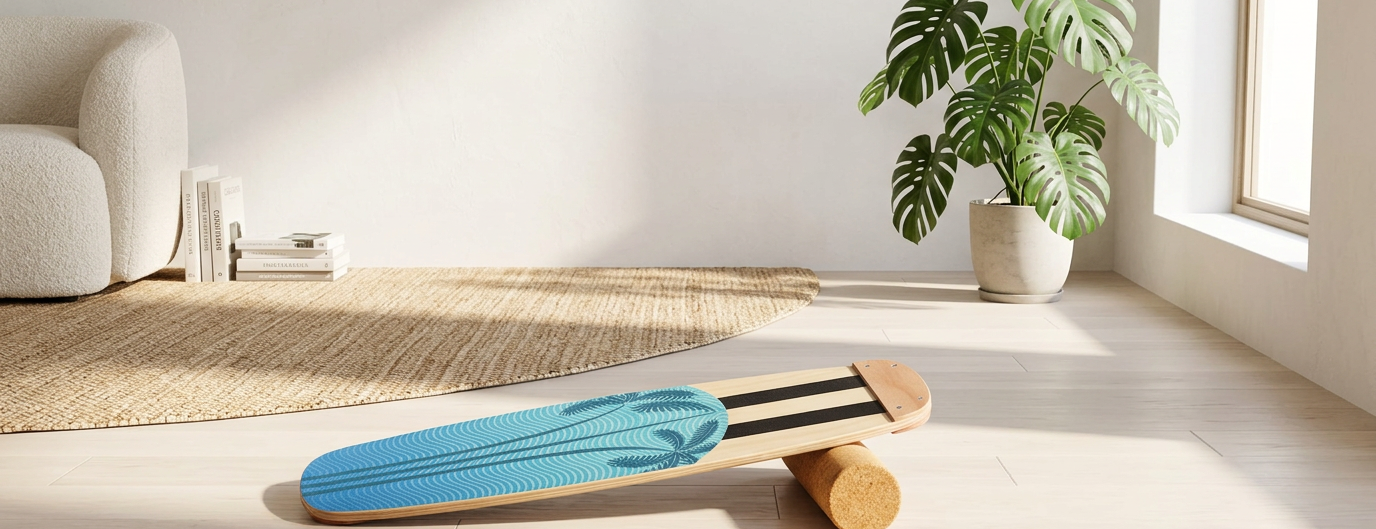
The balance wooden board, layer by layer
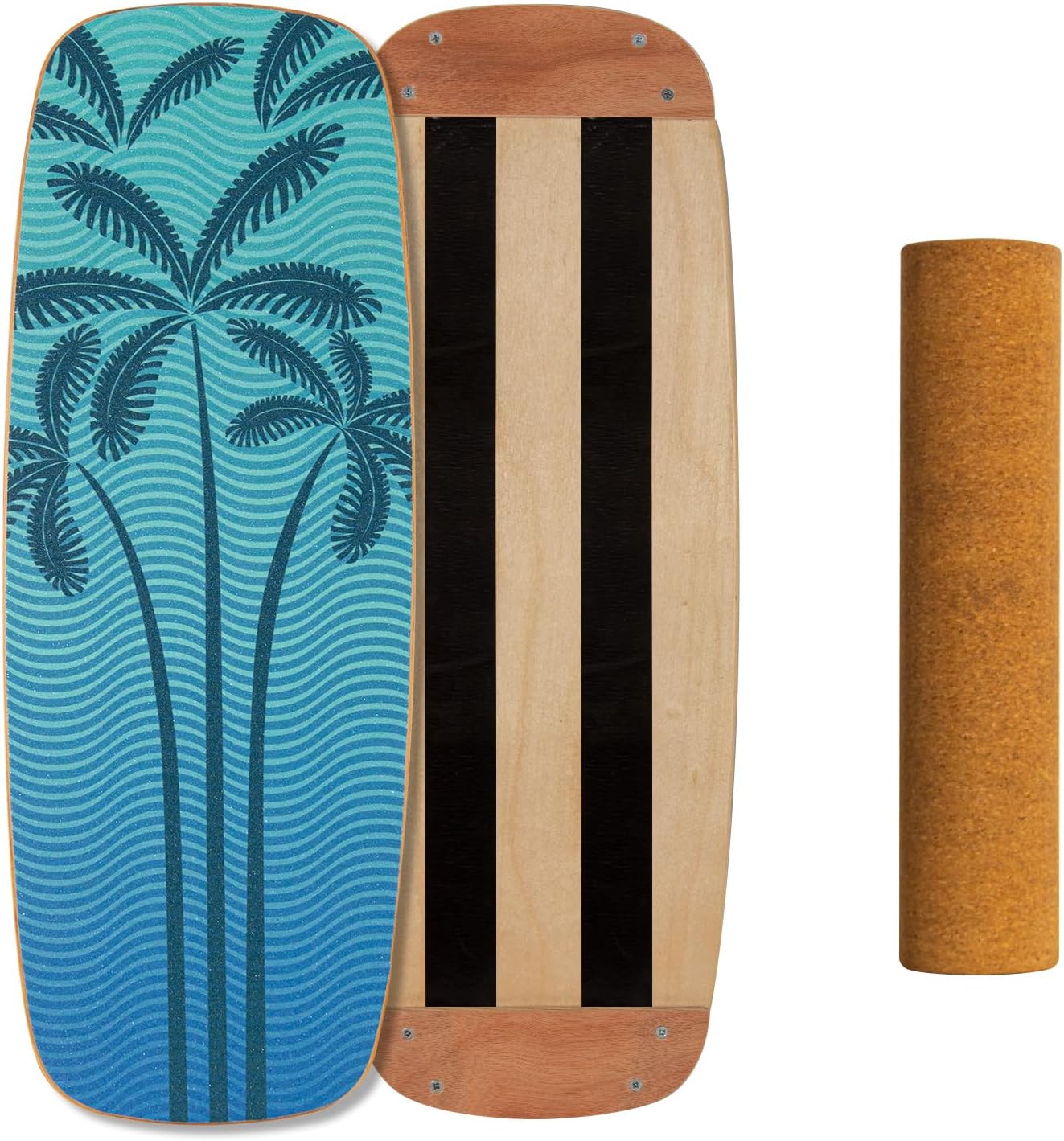
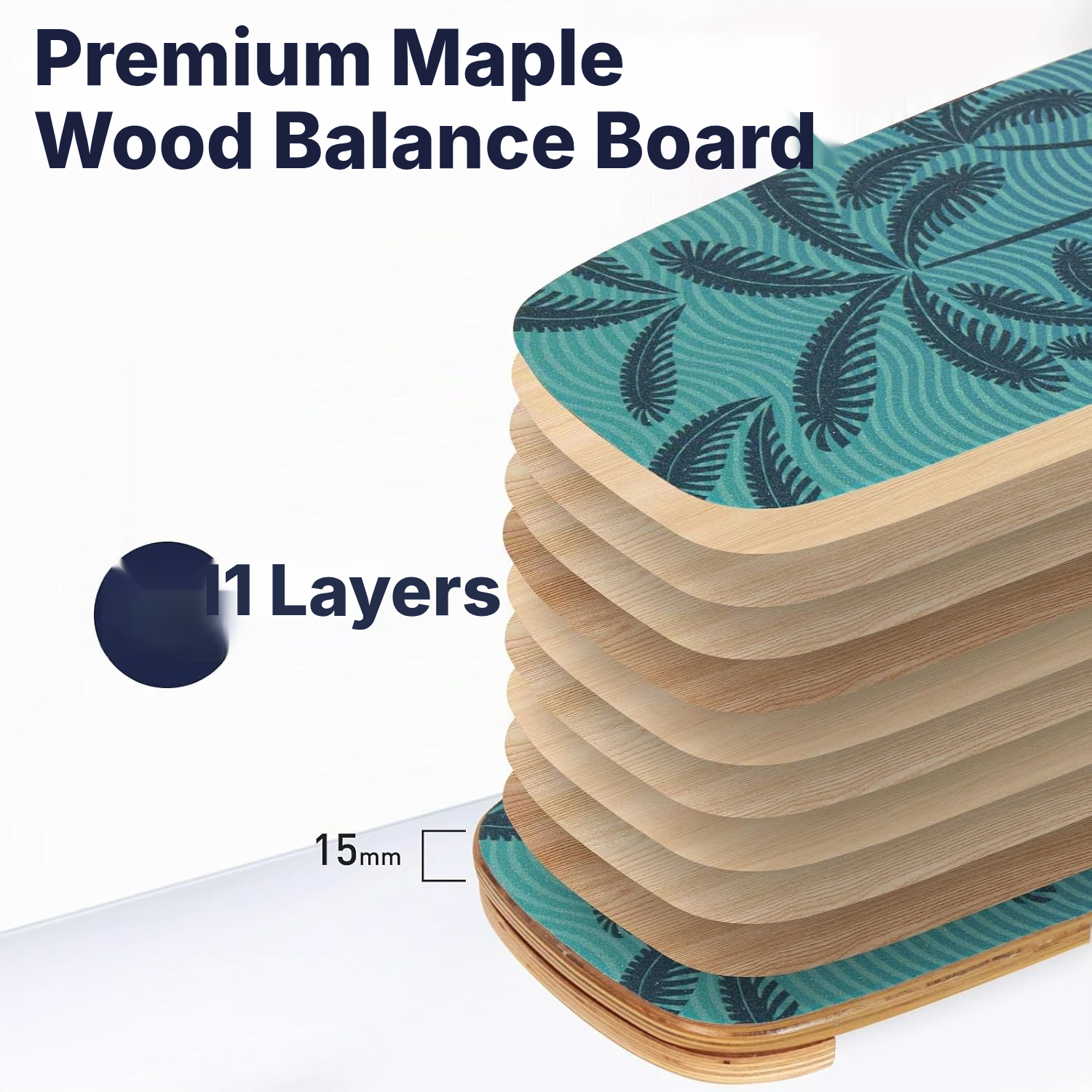
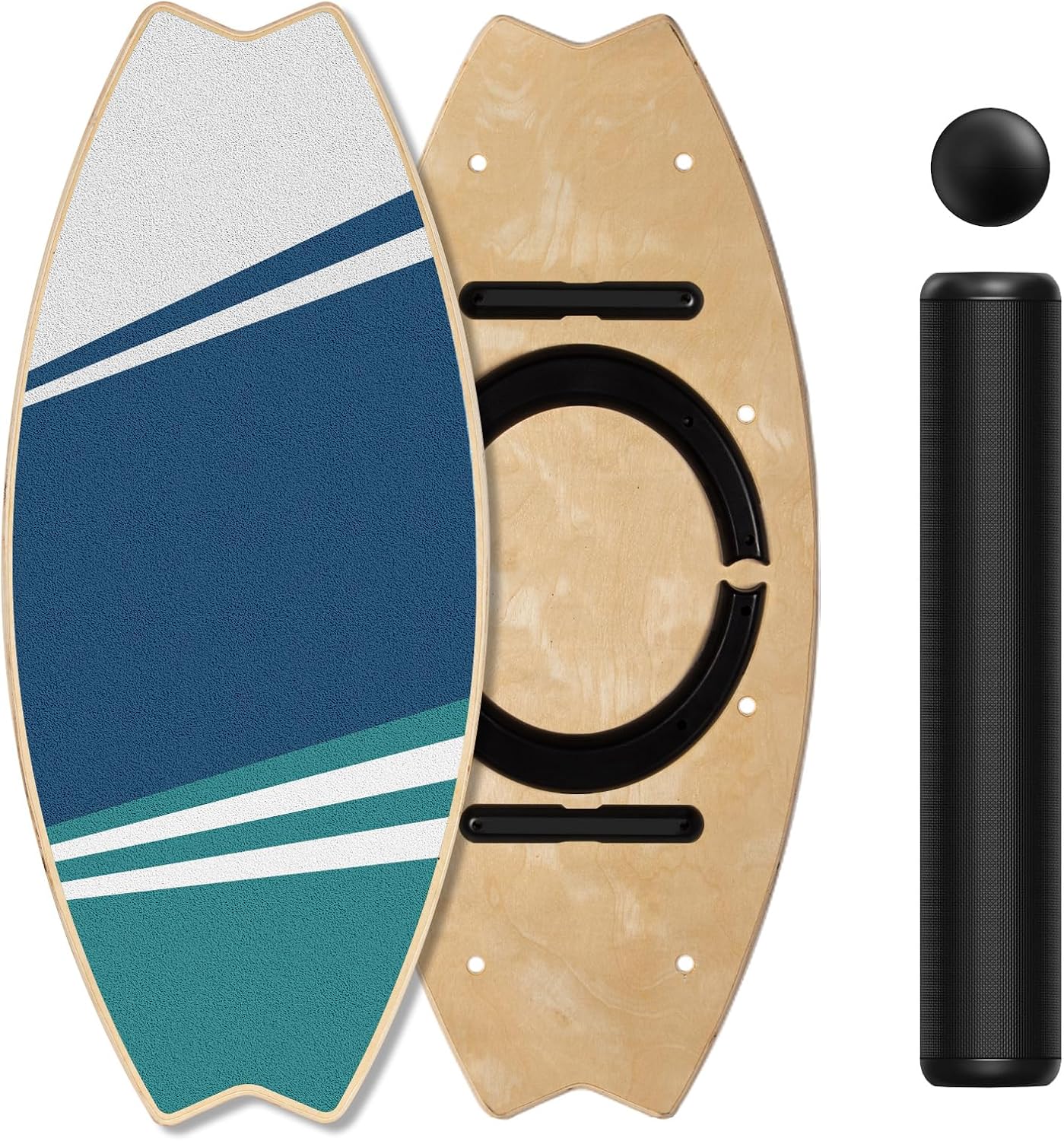
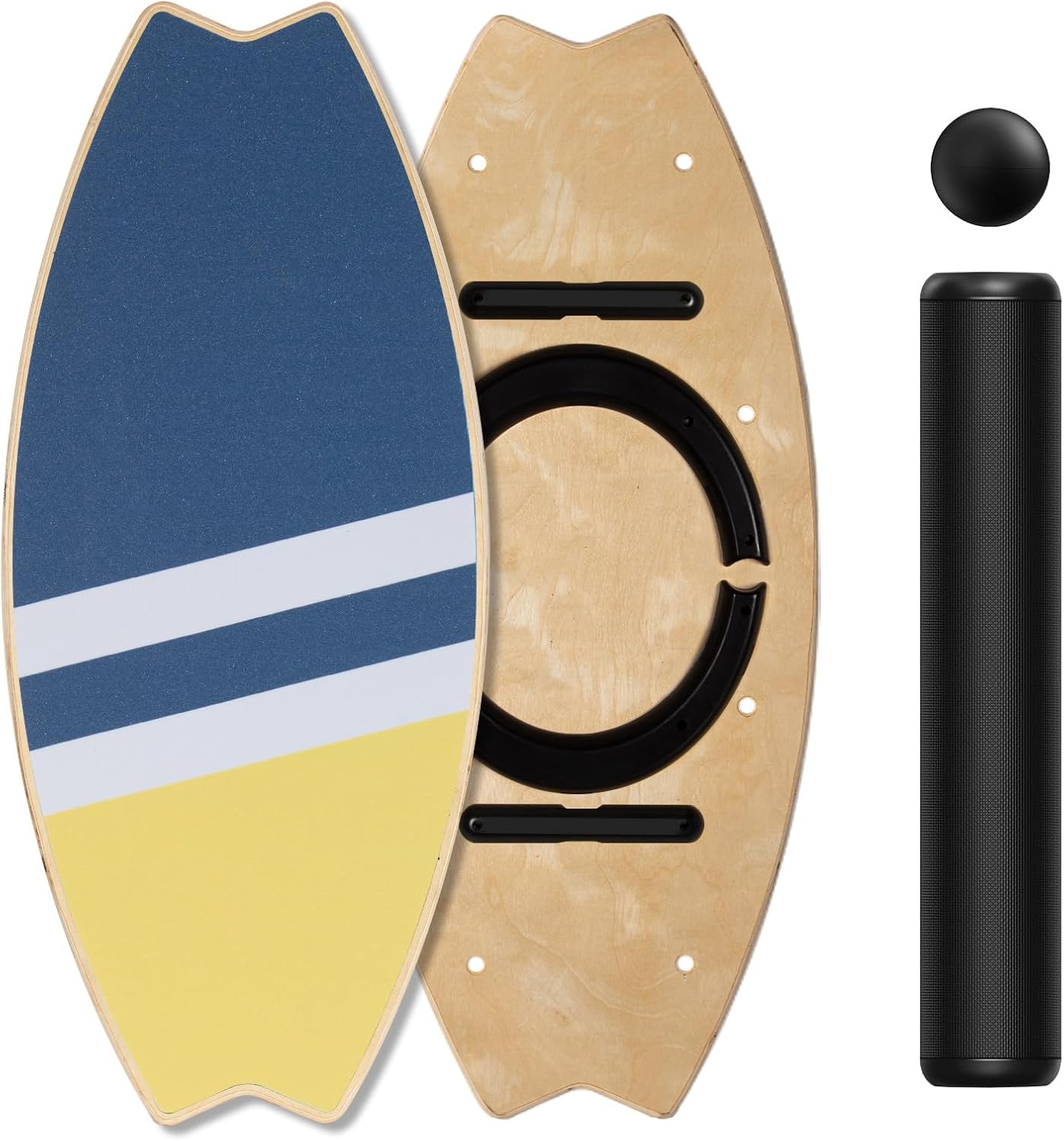
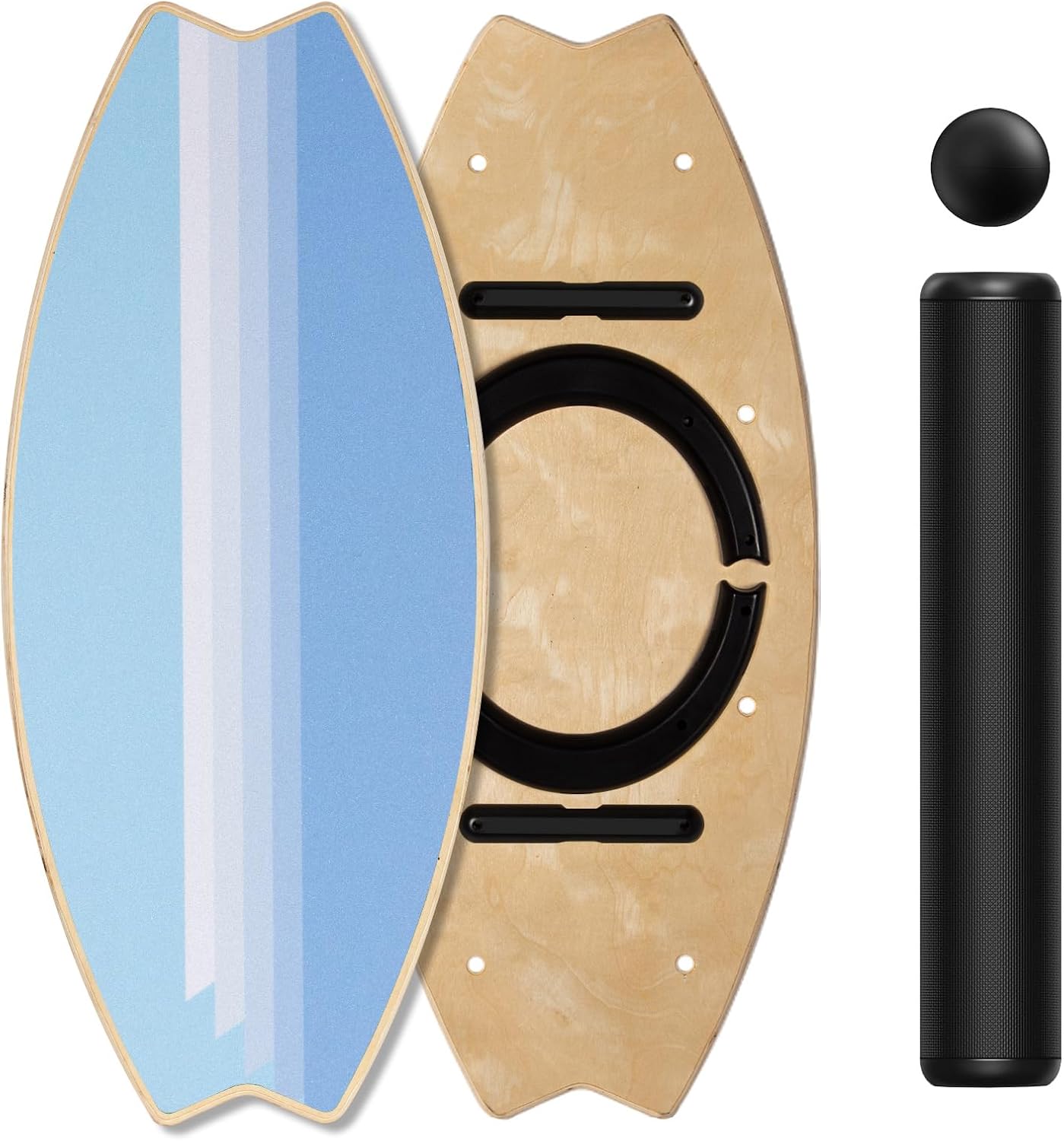
This balance board pairs a multi-layer maple deck with a balance board and roller setup plus a 7 cm ball, so you can train trunk stability, coordination, and the ankle control that carries over to surf, snowboard, ski, skate, and stand-up paddle — proper indoor skate prep too.
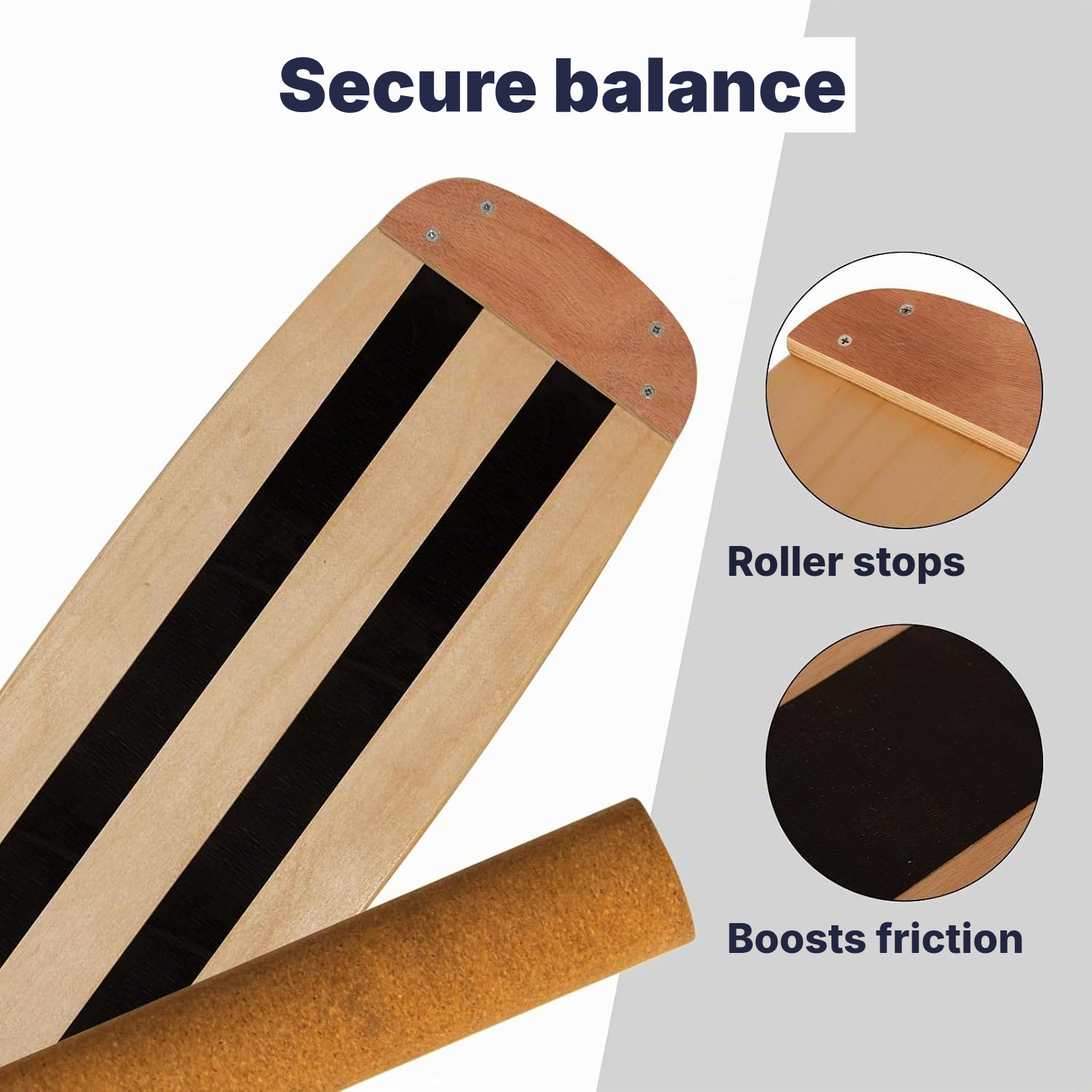
Start on the roller, the easiest option, then turn up the difficulty with the magnetic stops across 7 levels, LVL1 to LVL7. Swap to the 7 cm balance board ball when you want that wobbler balance board feel for half ball balance workout drills and balance board physiotherapy sessions.
The grippy top helps you stay planted through squats, lunges, incline push-ups, decline push-ups, mountain climbers, dips, hip bridges, and oblique twists — a solid balance pad fitness tool for home workouts.
How to set up your balance board
- Pick the balance roller or balance ball to match the level you want.
- Place the accessory under the board, on the underside with the pre-drilled holes.
- Drop the magnetic stops into the holes for the LVL1 to LVL7 level you want.
- Lower the stops gently and use their grooves to slide or remove them easily.
What to check before buying a balance board
- Keep at least 3 metres clear around you before training.
- Start with the roller if you're new, then move to the 7 cm ball as control improves.
- Use a flat, soft surface for the first sessions — not a hard floor.
- Wear suitable shoes, clothing, and the protections listed in the manual.
- Check with a doctor or coach if you have any medical concerns or injury risk.
Caring for your balance board
- Wipe with a soft damp cloth, no chemicals.
- Avoid direct sunlight.
- Keep away from any fire source.
- Avoid temperatures below -10°C or above 50°C.
- Inspect before each session and stop using if worn or damaged.
Balance board specs
- Type
- Balance board
- Model
- Cocotier Classic
- Size
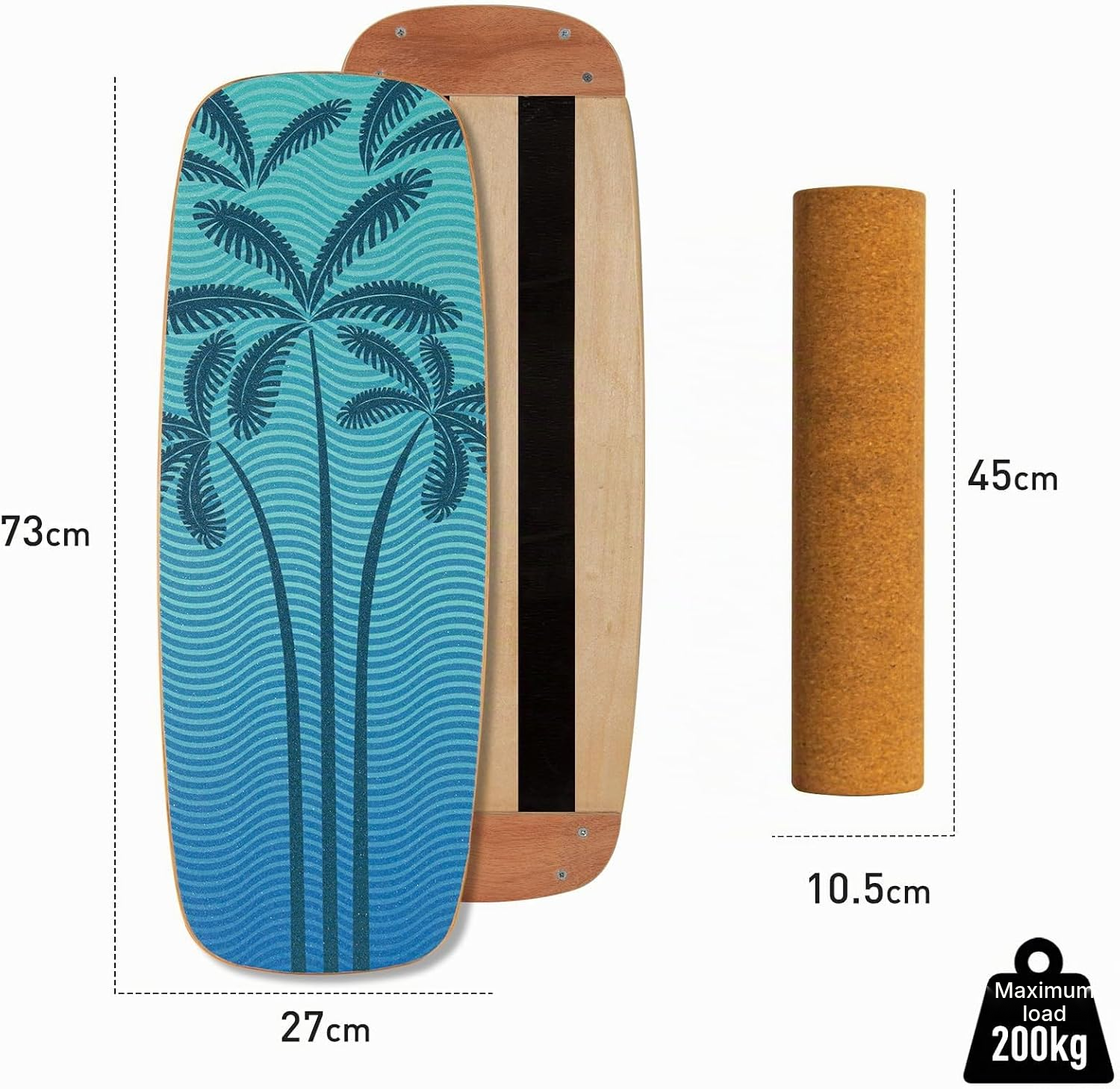
- 74 × 29 × 14 cm
- Weight
- 3.75 kg
- Max Load
- 200 kg
- Board Material
- Multi-layer maple wood, 11 layers
- Roller Material
- TPE
- Balance Ball Diameter
- 7 cm
- Difficulty Levels
- 7 levels, LVL1 to LVL7
- Use Modes
- Beginner, intermediate, advanced, expert
- Included
- 1 wooden balance board, 1 balance ball, 1 balance roller, 2 ball stops, 2 roller stops, 1 manual
- Assembly
- No assembly required apart from fitting accessories under the board
- Care
- Wipe with a soft damp cloth, no chemicals
- Storage Temperature
- Avoid below -10°C or above 50°C
- Limited Warranty
- 1 year
- Reference
- 0417-L-1
Balance board FAQs
is this balance board good for beginners?
Start on the roller, which is the most accessible option. The manual recommends beginning at the easiest setting, LVL1 or LVL2, then progressing gradually.
what is the difference vs a balance board?
This is not a video game accessory — it's a wooden balance board built for sport: core work, proprioception, and balance training with a roller or balance ball.
how much weight can this balance board hold?
The stated max load is 200 kg, supported by a multi-layer maple wood deck with 11 layers.
do you need much space to use a balance board at home?
The manual asks for at least 3 metres of clear space around you, kept away from children, pets, furniture, and other objects.
can you use the balance board ball on day one?
The manual recommends beginners start with the roller, which is easier, before moving to the 7 cm balance ball, which is more unstable.
what surface should you use a fitness balance board on?
For beginners, the manual warns against hard floors and recommends a flat, soft surface like a mat, carpet, or flat grass.
is this balance board suitable for children?
The manual states it is not a toy, the product is not intended for children, and it should be kept out of their reach.
how do you change the difficulty on a rocker board?
The magnetic stops slot into the holes underneath the board to set levels LVL1 to LVL7, from a centred roller to a more unstable setup with the balance ball.
what exercises can you do on an exercise balance board?
The manual lists squats, lunges, planks, incline push-ups, decline push-ups, mountain climbers, dips, hip bridges, and oblique twists.
how do you care for a balance wooden board?
Keep it out of direct sunlight, away from fire, and avoid temperatures below -10°C or above 50°C.
Customer reviews
You may also like
Ready to go?
Shipping included · 30-day returns