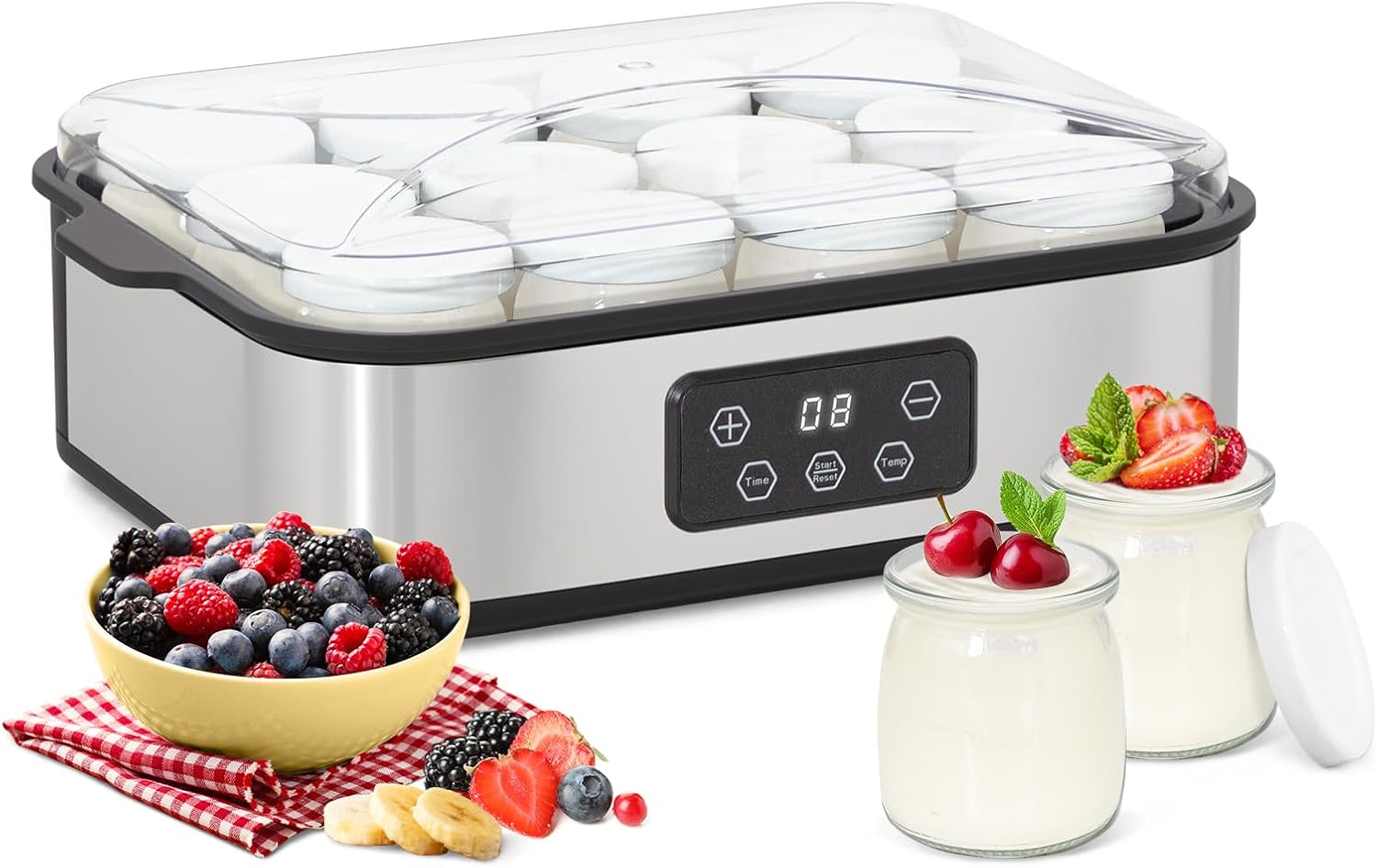
12-Pot Yoghurt Maker – Black, 180 ml Glass Pots
Prepare personalised homemade portions in one cycle, ready to chill, serve or take with you.
12-Pot Yogurt Maker: Everyday Benefits
Make Homemade Yogurt and Explore Different Uses
Plain Yogurt
Prepare simple portions while controlling the milk, starter culture and sugar.
Fruit Recipes
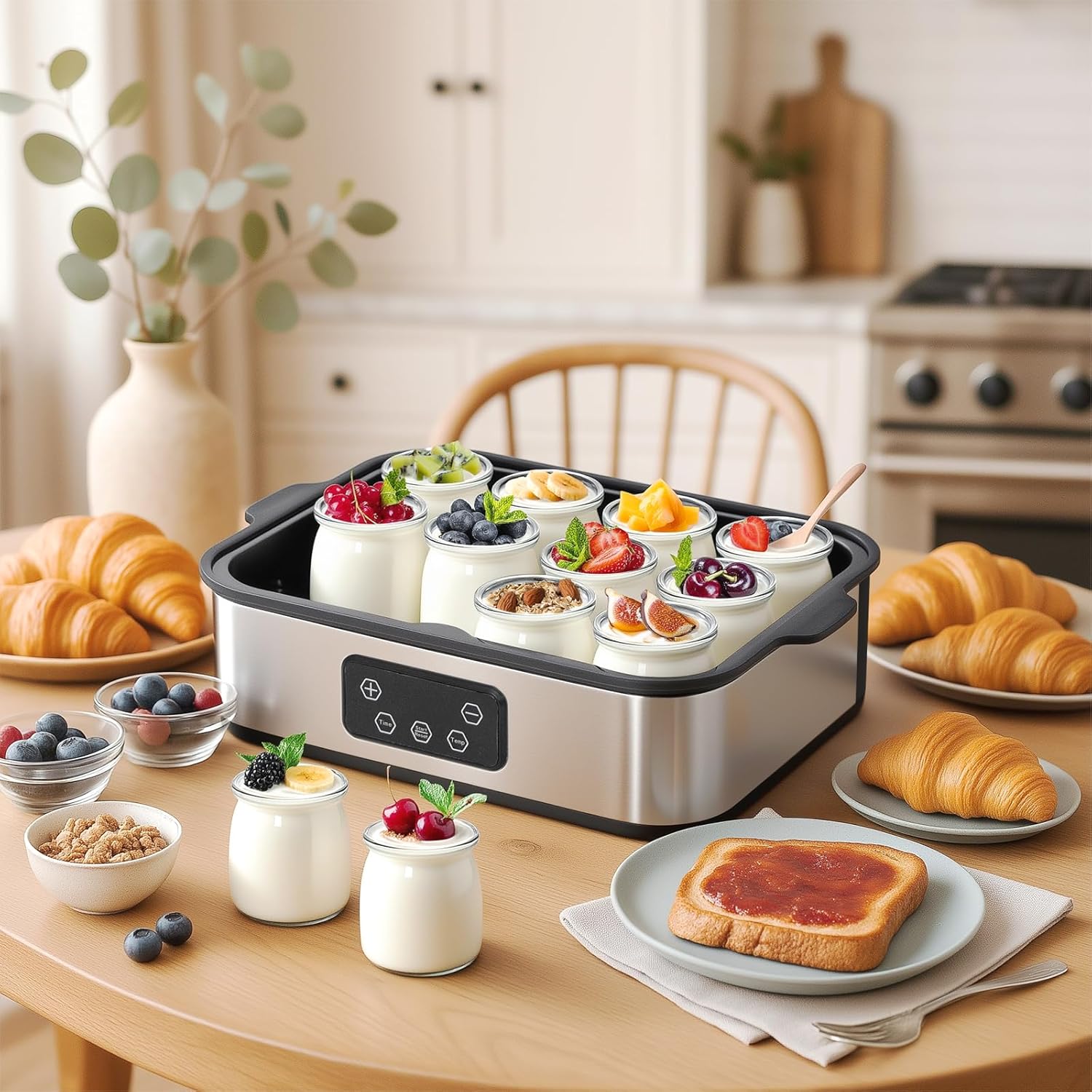
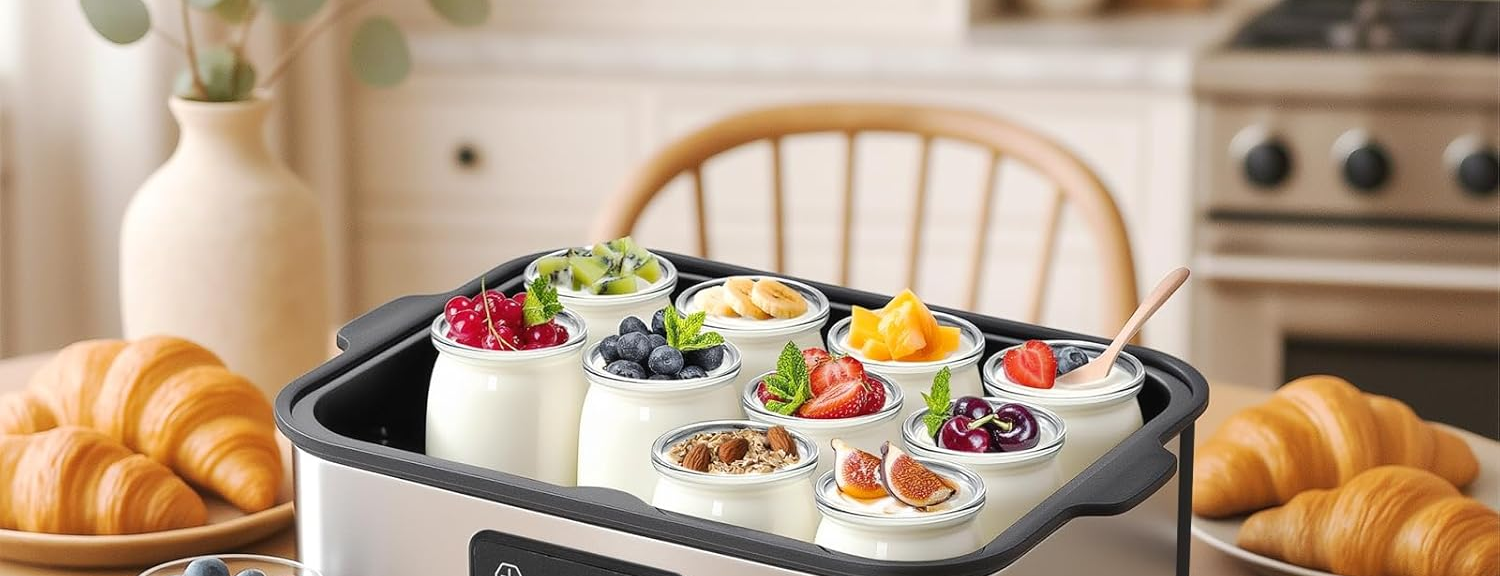
Distribute different flavours among the pots to satisfy several preferences in one cycle.
Smoothie Base
Keep portions ready to mix with the fruit of your choice.
Sauces and Dressings
Use a plain pot as a fresh base for your homemade dressings.
Dairy Desserts
Turn your fermented preparations into individual desserts that are easy to serve.
Organised Breakfasts
Keep the sealed pots ready so you have convenient portions throughout the week.
Different Milks and Starters
Test several preparations at the same time in clearly separated pots.
12-Pot Yogurt Maker with Glass Pots in Detail
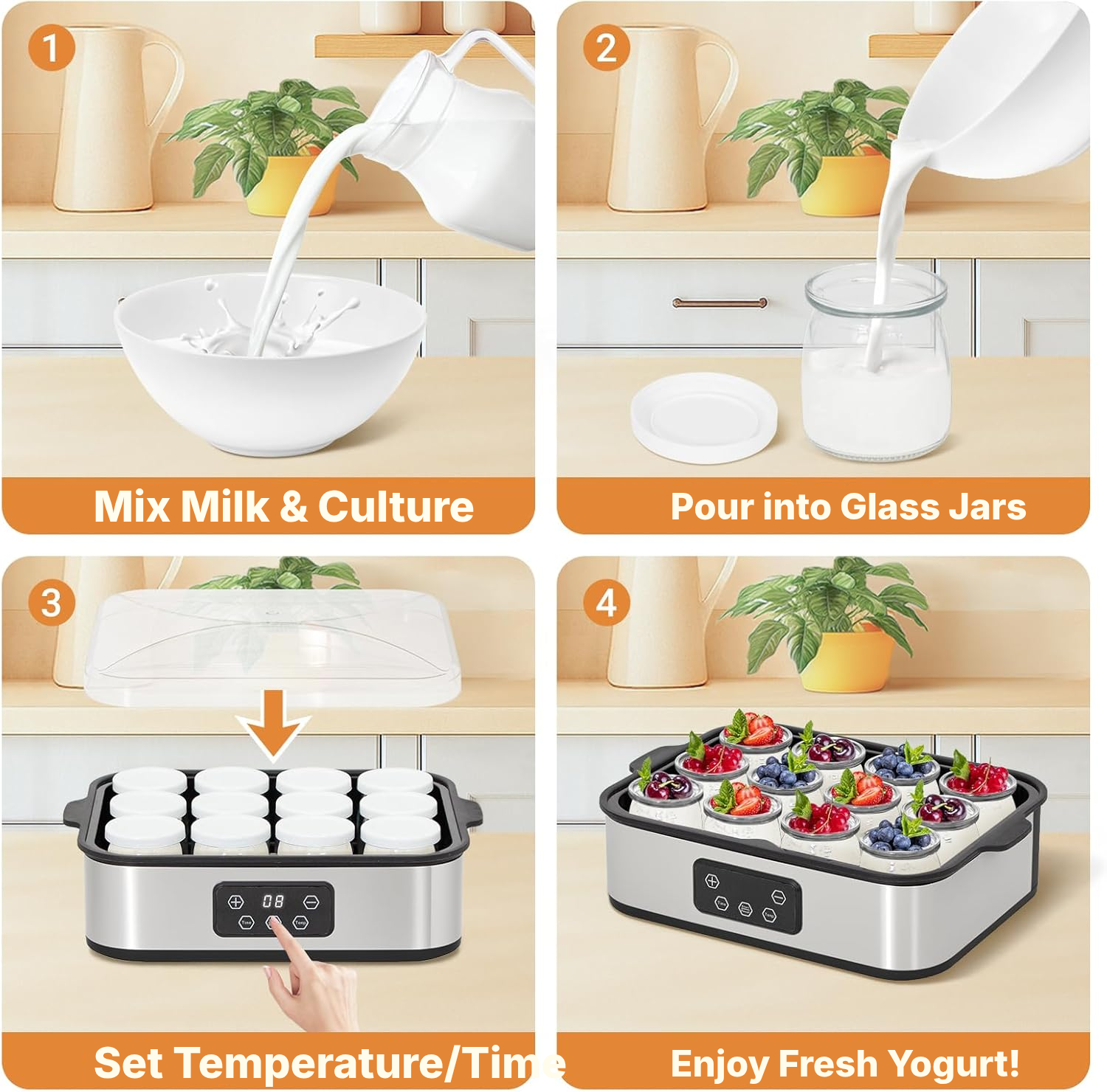
Choose your own milk, starter, sugar and flavours to create homemade yoghurt that suits your taste. With separate pots, you can prepare different recipes without giving the whole family the same flavour.
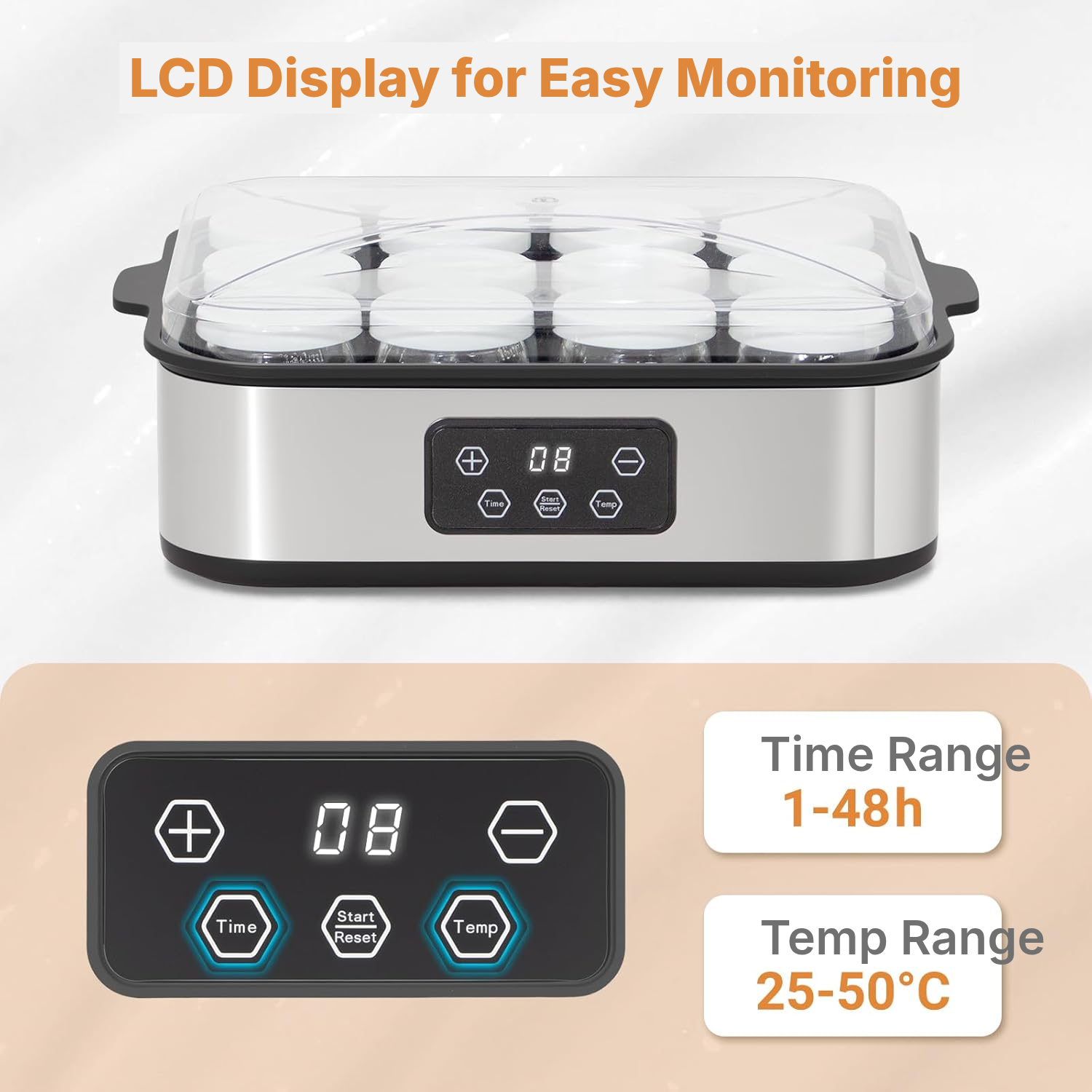
This yoghurt maker keeps recipes and settings easy to follow on its LCD screen. Touch “Time/Temp”, select the time or temperature with the + and – buttons, then start the cycle with “Start/Reset”.
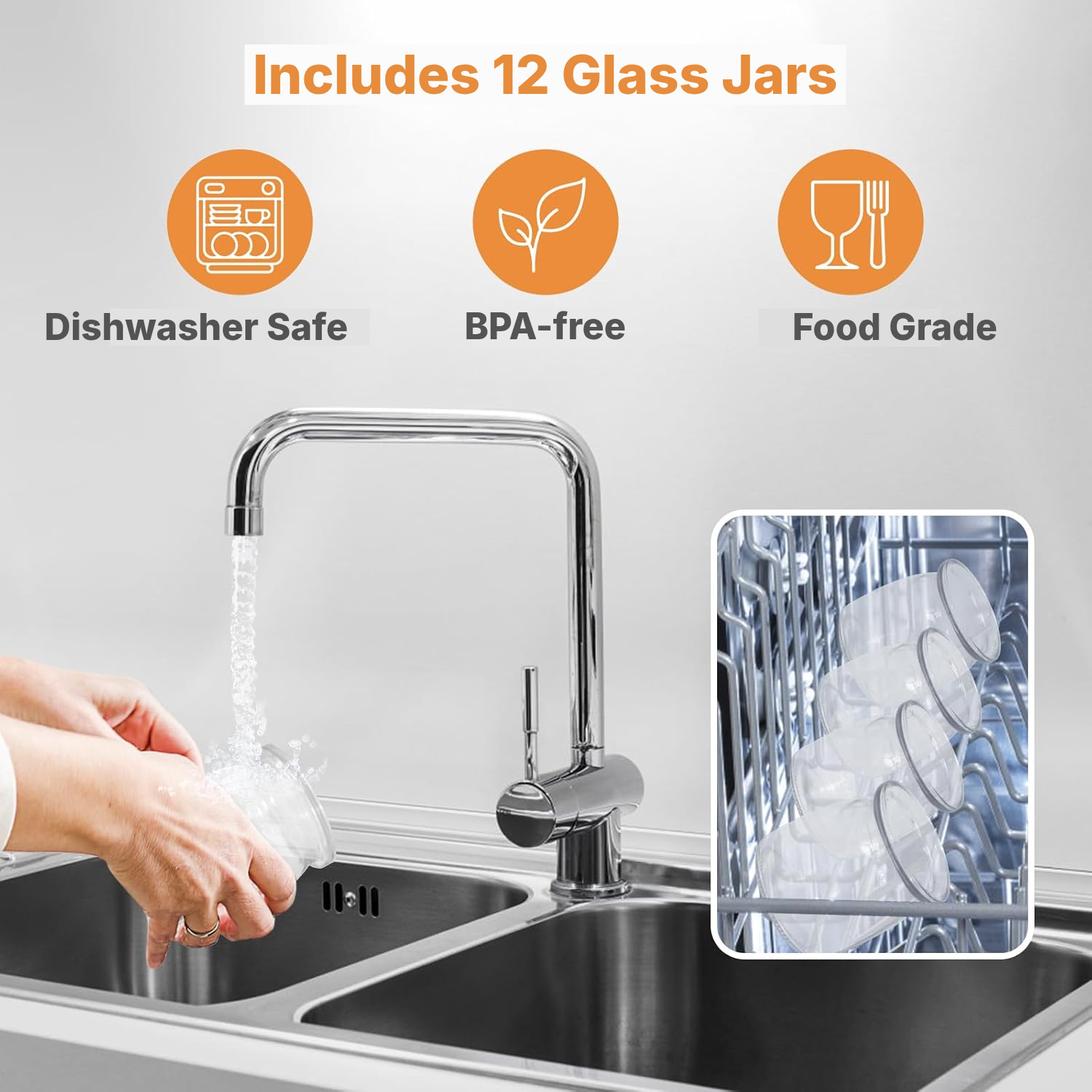
The glass pots with lids go straight from preparation to storage. This yoghurt maker machine is ideal for organised breakfasts, desserts and individual portions to take with you.
A creamy, yellow and slightly tangy texture indicates good fermentation. If the preparation develops a strong smell or produces too much gas, the instructions recommend throwing it away immediately.
How to Set Up Your Electric Yogurt Maker
- Check that the electrical supply matches the 220-240 V voltage specified for the appliance.
- Place the yogurt maker on a stable, dry and heat-resistant surface.
- Use a suitable socket, without a universal adapter or sharing the connection with other appliances.
- Insert the plug fully: the screen lights up and the appliance enters standby mode.
Which Yogurt Maker Is Right for Your Household?
- Check that 12 pots of 180 ml match the number and portion size you need.
- Make sure you have a 220-240 V power supply and a suitable socket that is not shared.
- Prepare a mixing container larger than 2200 ml, along with the equipment needed for sterilisation.
- Choose this appliance for supervised domestic use, not for continuous commercial production.
How to Care for a Homemade Yogurt Maker
- Unplug the appliance promptly after use.
- Allow it to cool completely before cleaning.
- Use a sponge with detergent, without steel wool that could damage the surface.
- Never immerse or rinse the machine; wipe only the exterior with a damp cloth.
- Before long-term storage, clean and dry the appliance, then store it in its original packaging in a dry, well-ventilated place.
Specifications of the 12-Pot, 180 ml Yogurt Maker
- Brand
- Todeco
- Type
- Multi-pot electric yoghurt maker
- Colour
- Black
- Actual dimensions
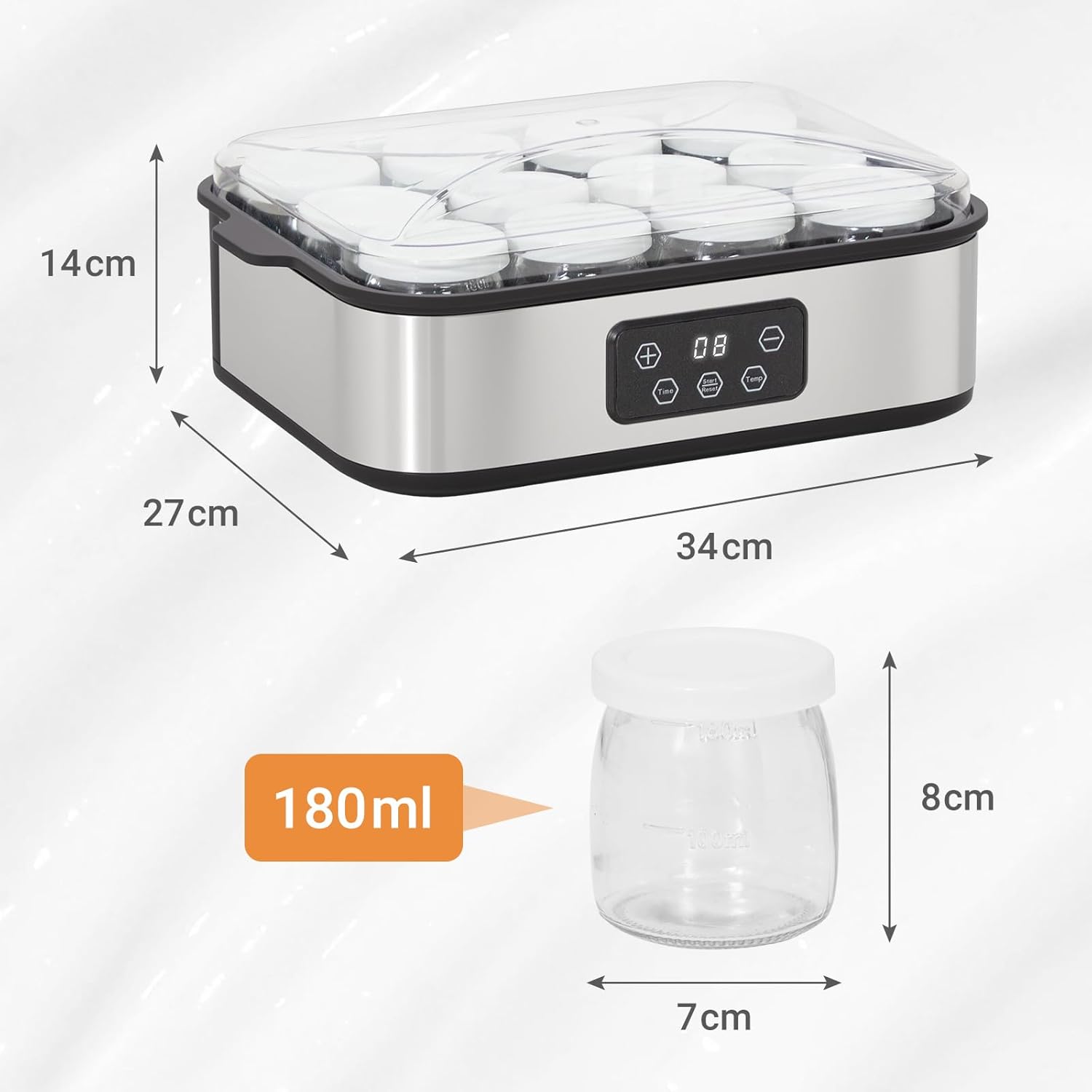
- 37.7 × 27.1 × 14 cm
- Weight
- 3.4 kg
- Number of pots
- 12
- Capacity per pot
- 180 ml
- Total pot capacity
- 2160 ml
- Recommended mixing container
- More than 2200 ml
- Power
- 25 W
- Voltage
- 220-240 V
- Frequency
- 50/60 Hz
- Default temperature
- 42 °C
- Default fermentation time
- 8 h
- Maximum recommended yoghurt time
- 12 h
- Recommended warm water in the cavity
- 500 ml at 30-35 °C
- Proportion of plain yoghurt as starter
- 5 %
- Automatic setting validation
- After 10 flashes with an audible signal
- Manual stop
- Press Start/Reset for 3 seconds
- Protection against electric shock
- Class II
- Materials
- Stainless steel, polypropylene and glass
- Use
- Domestic use only
- Included contents
- 1 yoghurt maker, 12 glass pots with lids, 1 user manual
- Reference
- 0473-T-1
Questions About Making Yogurt in a Yogurt Maker
Do I need to sterilise the pots before making homemade yoghurt?
Sterilise the glass pots and mixing container before every preparation; otherwise, fermentation may fail.
Can I open the yoghurt maker during fermentation?
Opening the lid during the cycle can disrupt fermentation and cause the preparation to fail.
How long should yoghurt stay in a yoghurt maker?
The default cycle lasts 8 h. Do not let the preparation exceed 12 h, as excessive fermentation may affect the cultures and nutritional quality.
Why is my yoghurt still runny after using a yoghurt maker?
A cool room temperature or milk that is too cold may require a longer fermentation time, always within the recommended 12 h limit.
Does this electric yoghurt maker need water?
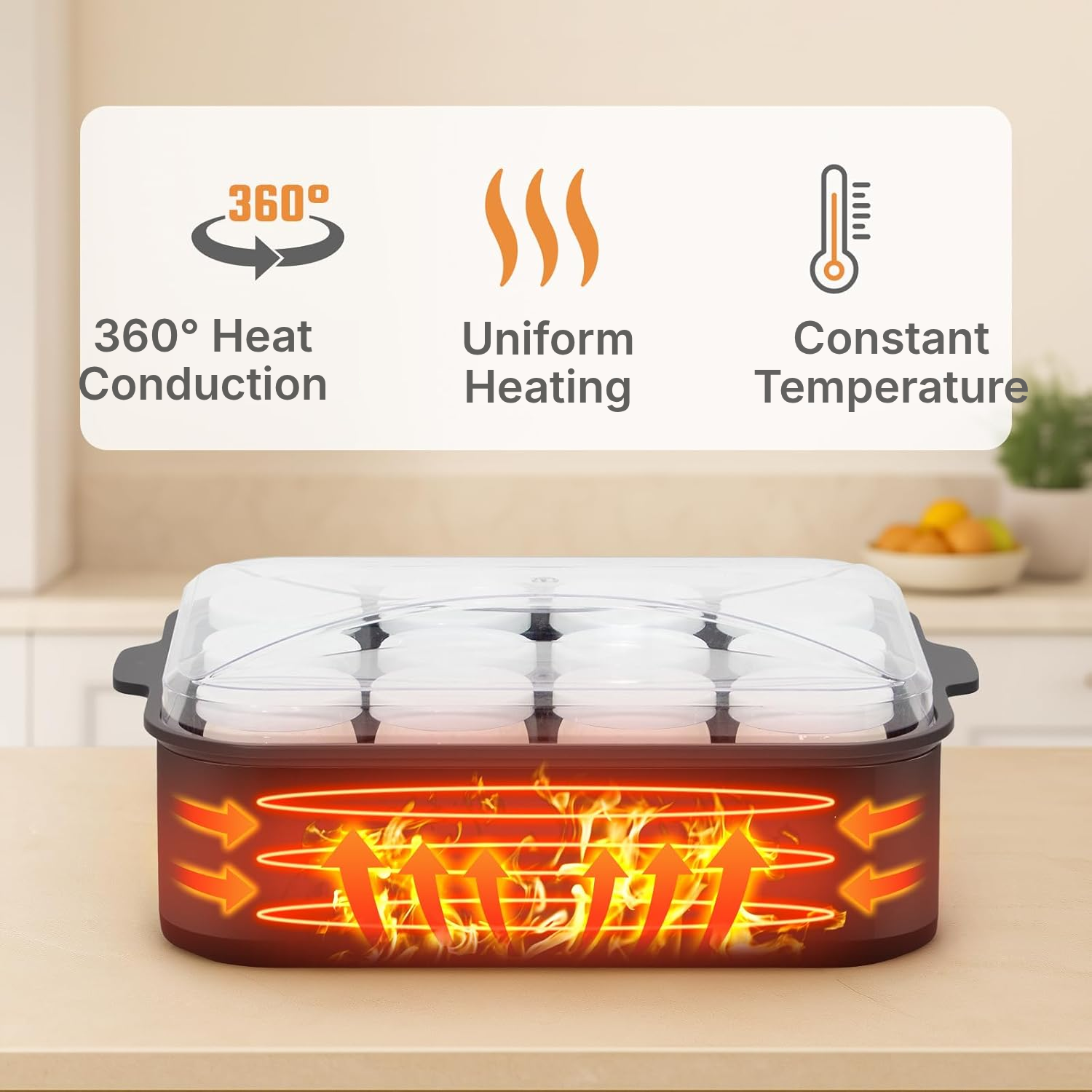
The instructions recommend adding 500 ml of warm water at 30-35 °C to the main cavity for more even heating.
When can I clean the yoghurt maker after use?
Unplug it after use and wait until it has cooled completely to room temperature before cleaning, to help avoid burns.
Can I wash the yoghurt maker under running water?
Do not immerse or rinse the machine. Clean only its outer surface with a damp cloth.
What socket does a homemade yoghurt maker need?
Check for a 220-240 V power supply and push the plug fully into a suitable socket. Do not use a universal socket or share it with other appliances.
Can a yoghurt maker run unattended?
The appliance must be supervised while operating and kept out of children's reach.
Is this yoghurt maker suitable for professional use?
It is intended for domestic use only and must not be operated intensively or continuously.
Are 12-pot yoghurt maker containers large enough?
Each pot holds 180 ml. The set provides 2160 ml of total capacity, divided into individual portions rather than one large container.
How can I tell if homemade yoghurt is contaminated?
A strong smell or excess gas indicates contamination. Throw the preparation away immediately and sterilise the containers before the next cycle.
Customer reviews
You may also like
Ready to go?
Shipping included · 30-day returns